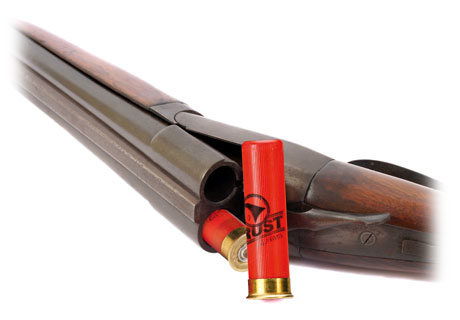
A complete guide to shotgun shells: gauge, maximum pressure, buckshot, loads, lengths, numbering, equivalences, species and care.
Contents
- Gauge
- Maximum pressure
- Buckshot
- Shotgun shell shot load
- Brass base length
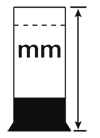
- Case length
- Shot numbering by country
- Equivalences
- Species
- Shot shell care
Gauge
Gauge refers to the number of lead spheres of equal diameter, equivalent to one pound (0.454 kg), that fit inside a shotgun’s bore.
The most common shotgun gauges are: 12, 16, 20, 24, 28 and 36 (.410). There are also non-standard gauges: 8, 10, 14 and 9 mm.
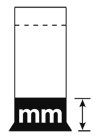
According to the height of the metallic base of the case or cartridge, the gauge types are:
- Type 1 = 8 mm
- Type 2 = 12 mm
- Type 3 = 16 mm
- Type 4 = 22 mm
- Type 5 = 27 mm
Less commonly used types have heights of 10, 14 and 25 mm.
The most commonly used cartridges are 70 mm (2 ¾ inches) in length, but other lengths exist: 65, 67.5, 76 and even 89 mm (3 1/2 inches).
When buying a shot shell, the most important aspects are the load and the shot size, which must correspond to the type of hunting you are doing.
Maximum pressure
Maximum pressures for shot shells are set by the C.I.P., the body that oversees user safety. The following table shows the maximum pressure per cartridge:
| SHOT SHELL | MAX P. | INDIVIDUAL MAX |
|---|---|---|
| Normal proof pressure 900 bar | ||
| 12 gauge and bigger | 650 bar | 747 bar |
| 16 gauge | 680 bar | 782 bar |
| 20 gauge and smaller | 720 bar | 828 bar |
| Proof over 1200 bar | ||
| All gauges | 900 bar | 1030 bar |
Failure to comply with this standard can lead to very serious consequences.
Buckshot
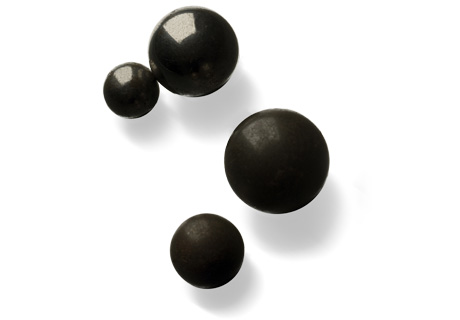
Buckshot is lead shot that weighs 2.5 g or more. Under this standard, the following measurements are buckshot:
- 9.10 mm Ø shot = 4.54 g
- 8.65 mm Ø shot = 3.80 g
- 7.65 mm Ø shot = 2.57 g
Shotgun shell shot load
Grams of shot, usually lead, contained in the cartridge.
This load can be:
- Fine shot from No. 4 to 11
- Coarse shot from No. 3 to 0000 (AAA)
- Buckshot
- Slugs
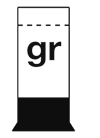
Brass base length
Case length
Shot numbering by country
Shot numbering by country.
| mm. | SPAIN | USA | GREAT BRITAIN | ITALY | UNITS IN 10 g |
|---|---|---|---|---|---|
| 1.50 | 11 | 11 | 11 | 11 | 526 |
| 1.75 | 10 | 10 | 10 | 10 | 303 |
| 2.00 | 9 | 9 | 9 | 9½ | 208 |
| 2.25 | 8 | 8 | 8 | 8 | 145 |
| 2.37 | 7½ | 7½ | 7½ | 7½ | 130 |
| 2.50 | 7 | 7 | 6 | 7 | 106 |
| 2.75 | 6 | 6 | 5 | 6 | 79 |
| 3.00 | 5 | – | 4 | 5 | 63 |
| 3.25 | 4 | 4 | 3 | 4 | 51 |
| 3.50 | 3 | 3 | 2 | 2 | 40 |
| 3.75 | 2 | 2 | 1 | 1 | 32 |
| 4.00 | 1 | B | BB | 0 | 27 |
| 4.25 | 0 | BB | BB | 2/0 | 22 |
| 4.50 | 00 | BB | AA | 4/0 | 19 |
| 4.75 | 0000 | – | AAA | 5/0 | 17 |
| 6.20 | Posta | – | – | 7/0 | 7.14 |
| 6.80 | Posta 6.80 | – | – | 8/0 | 5.41 |
| 7.40 | Posta 7.40 | 1 Buck | SSG | – | 4.39 |
| 7.64 | Posta 7.65 | 0 Buck | SP.SG | 9/0 | 3.80 |
| 8.65 | Posta 8.65 | 00 Buck | SG | 10/0 | 2.80 |
Equivalences
| Gauge / calibre | English equivalent |
|---|---|
| 12 | 12 gauge |
| 16 | 16 gauge |
| 20 | 20 gauge |
| 24 | 24 gauge |
| 28 | 28 gauge |
| 32 | 14 mm calibre / gauge |
| 36/50 | 12 mm calibre / 50 = .410 / 50 gauge |
| 36/65 | 12 mm calibre / 65 = .410 / 65 gauge |
| 36/76 Magnum | 12 mm cal. / 76 Mag. = .410 / 76 gauge |
- 1 ounce = 28.35 g / 1 ounce = 16 drams / 1 dram = 1.775 g
- 1 g = 15.40 grains / 1 m = 3.281 feet (ft)
- 1 inch = 25.4 mm / 1 pound = 453.60 g
Dram Eq. = the energy produced by a dose in drams of black powder. Dram = drams.
Species
The species listed here serve as a guideline only and should be reviewed depending on shot size, shooting distance and environmental conditions.
At TRUST we insist on the need to respect protected species and hunting seasons.
 Quail |  Partridge |  Fox |
 Thrush |  Pheasant |  Goose |
 Dove |  Woodcock |  Boar |
 Small bird |  Duck |  Roe |
 Rabbit |  Hare |  Disc |
Shot shell care
- Store shotgun shells in suitable conditions: 21 °C (70 °F) and 60% humidity, preferably in a secure, well-ventilated place.
- Respect protected species.
- Do not leave spent cases in the field.
- Where possible, use biodegradable wads.
- Make sure the cartridge case length matches your shotgun chamber (70 or 76 mm are the most common). A mismatch can be dangerous.
- Use cartridges loaded to C.I.P. standards, which protect the safety of the firearm and ammunition.
- If your shotgun is not proof-tested to 1200 bar or kg/cm², do not fire cartridges marked to that specification.